Designing a scalable CDN management platform
Building the interface for managing global content delivery infrastructure — from origins and caching to security policies and traffic optimization.
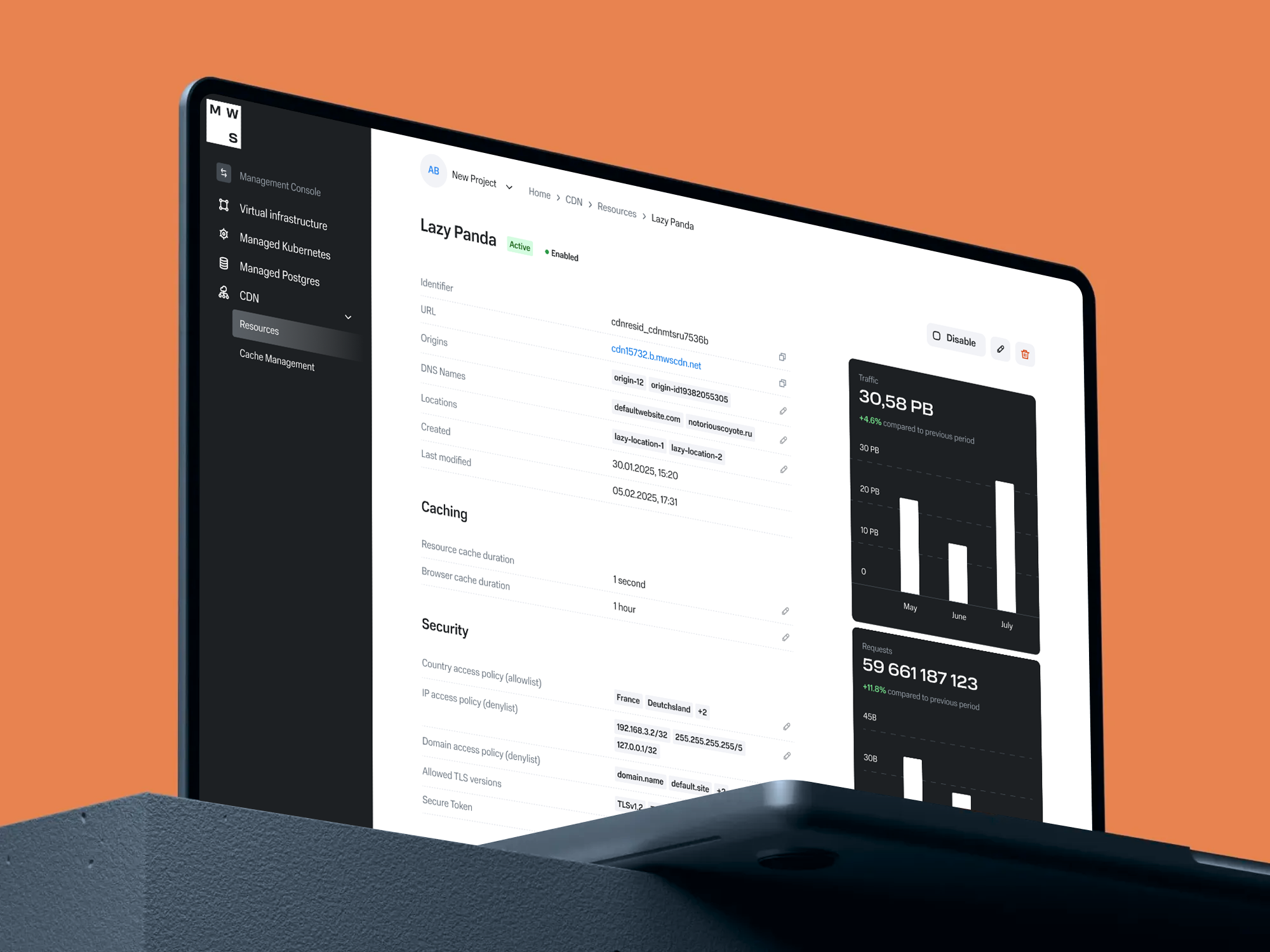
Managing global content delivery infrastructure
The challenge
CDN platforms operate with multiple layers of configuration and operational settings.
The challenge was to structure this complex infrastructure into a clear and scalable interface that helps engineers configure delivery resources efficiently, maintain visibility over traffic behaviour and safely operate performance-critical systems.
How content delivery works
When a user requests content, the request is routed through the CDN network.
Edge servers deliver cached content closer to the user, reducing latency and offloading traffic from the origin server.
Infrastructure teams configure caching behaviour, security policies and routing rules to control how content is delivered and optimized across the network.
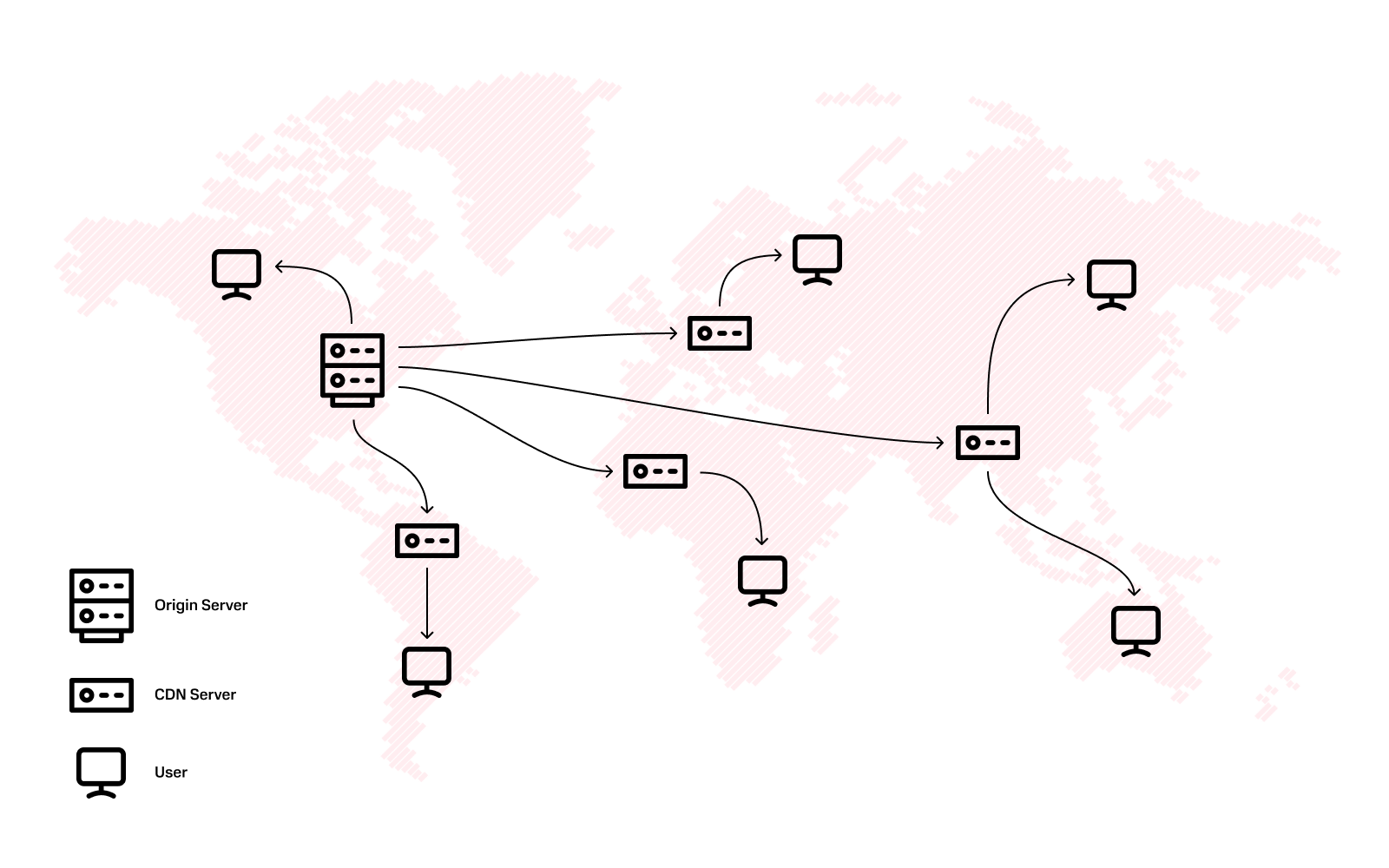
User requests are routed through the CDN network, where edge servers deliver cached content closer to the user
Design challenge
The goal was to create predictable workflows, structured configuration patterns and a hierarchy that allows teams to operate delivery infrastructure efficiently.
Managing CDN infrastructure often involves dozens of resources and configurations. The resource list provides a structured overview that helps teams quickly locate, filter and manage delivery resources.
Managing CDN resources
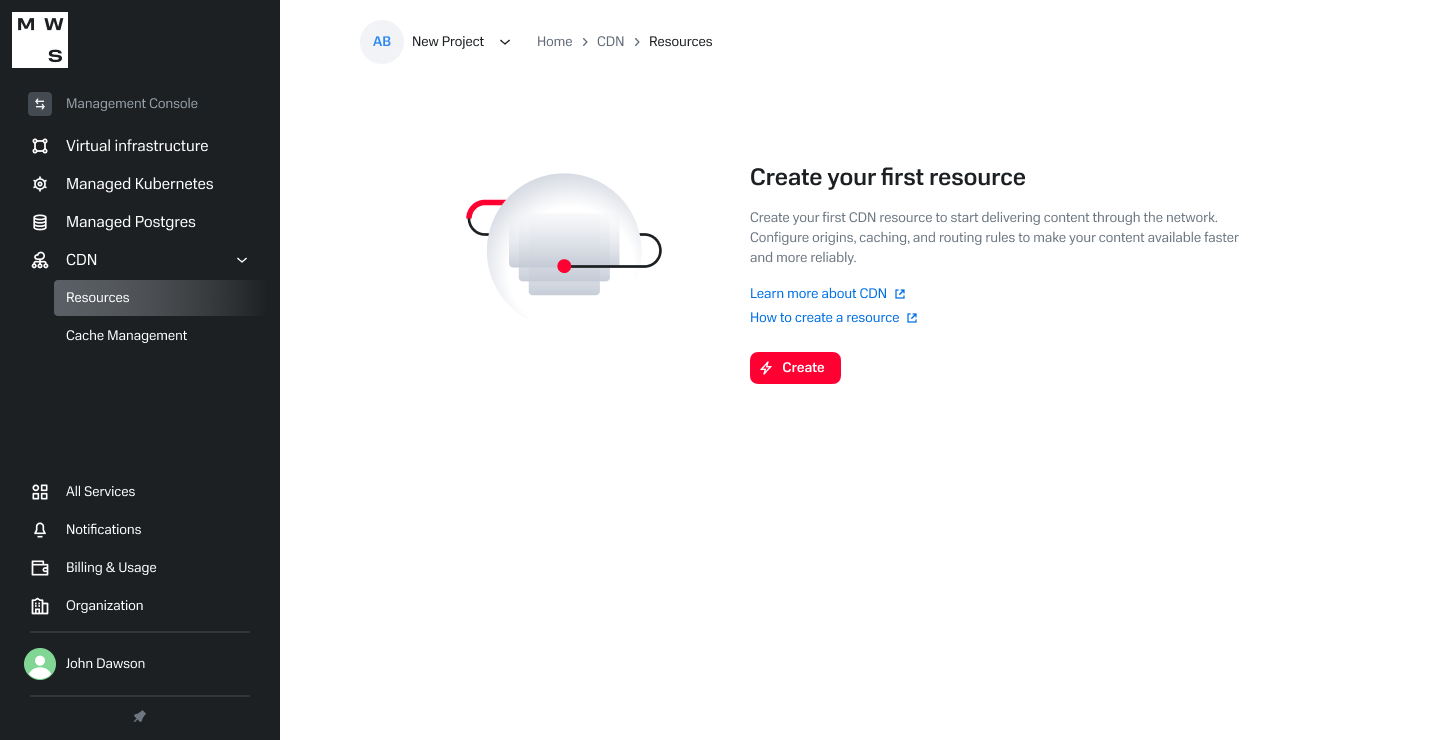
The empty state introduces the product structure and guides teams through the creation of their first CDN resource
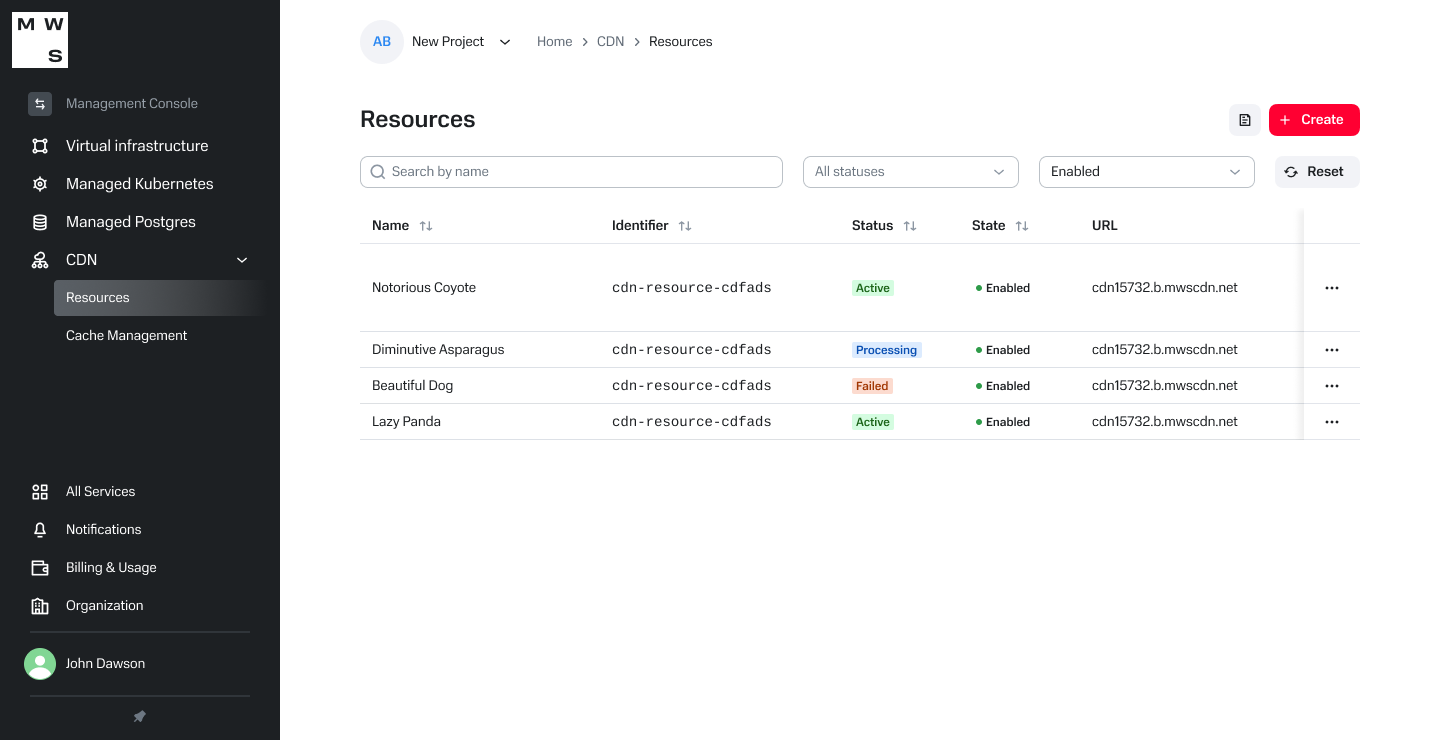
The resource list provides a clear overview of all CDN instances, including status, domains and configuration details
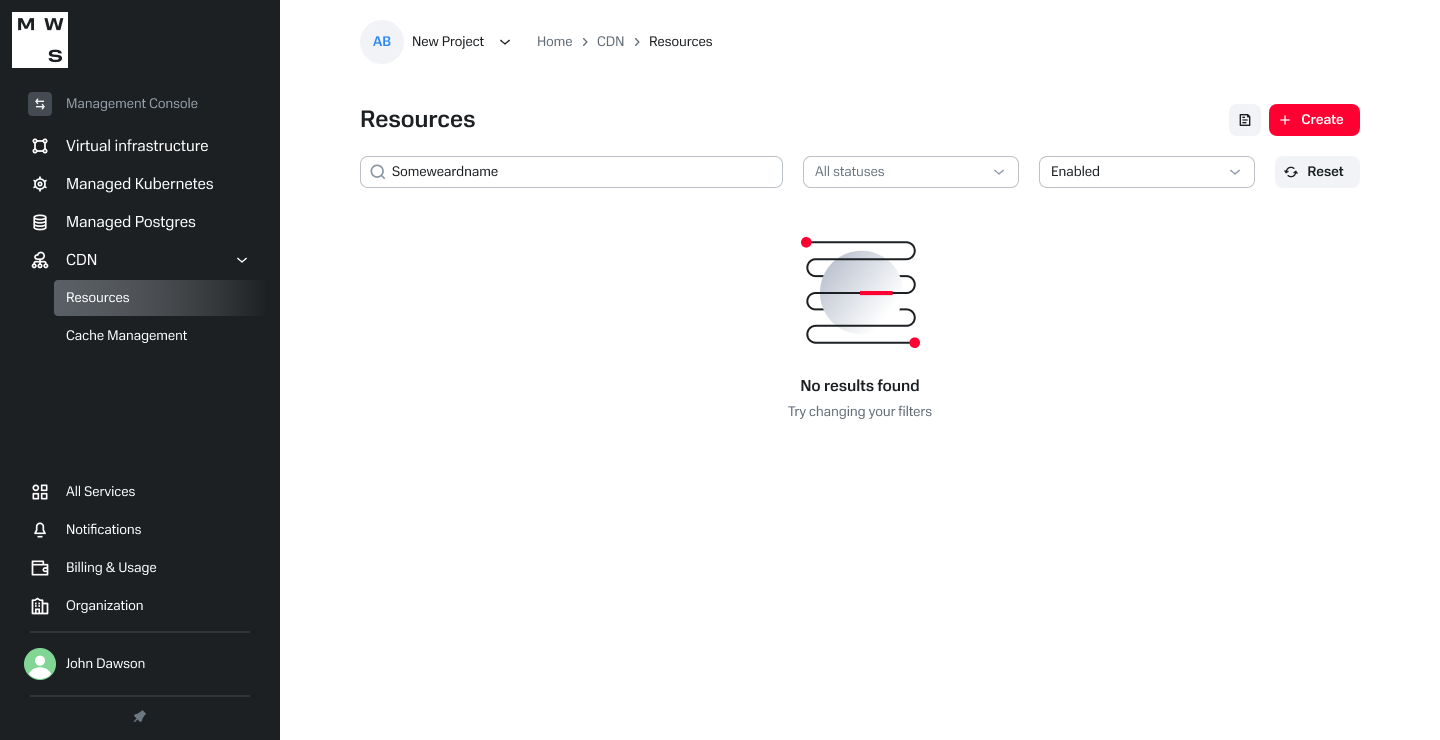
Filtering and empty-result states help engineers quickly find resources and manage large infrastructure environments
System complexity
Managing CDN delivery requires controlling multiple configuration layers at once: resource states, origin routing, caching policies, certificates, security restrictions and delivery optimization.
The interface was designed to expose this complexity without overwhelming the user. Configuration parameters are grouped into logical sections that support faster scanning and more confident editing.
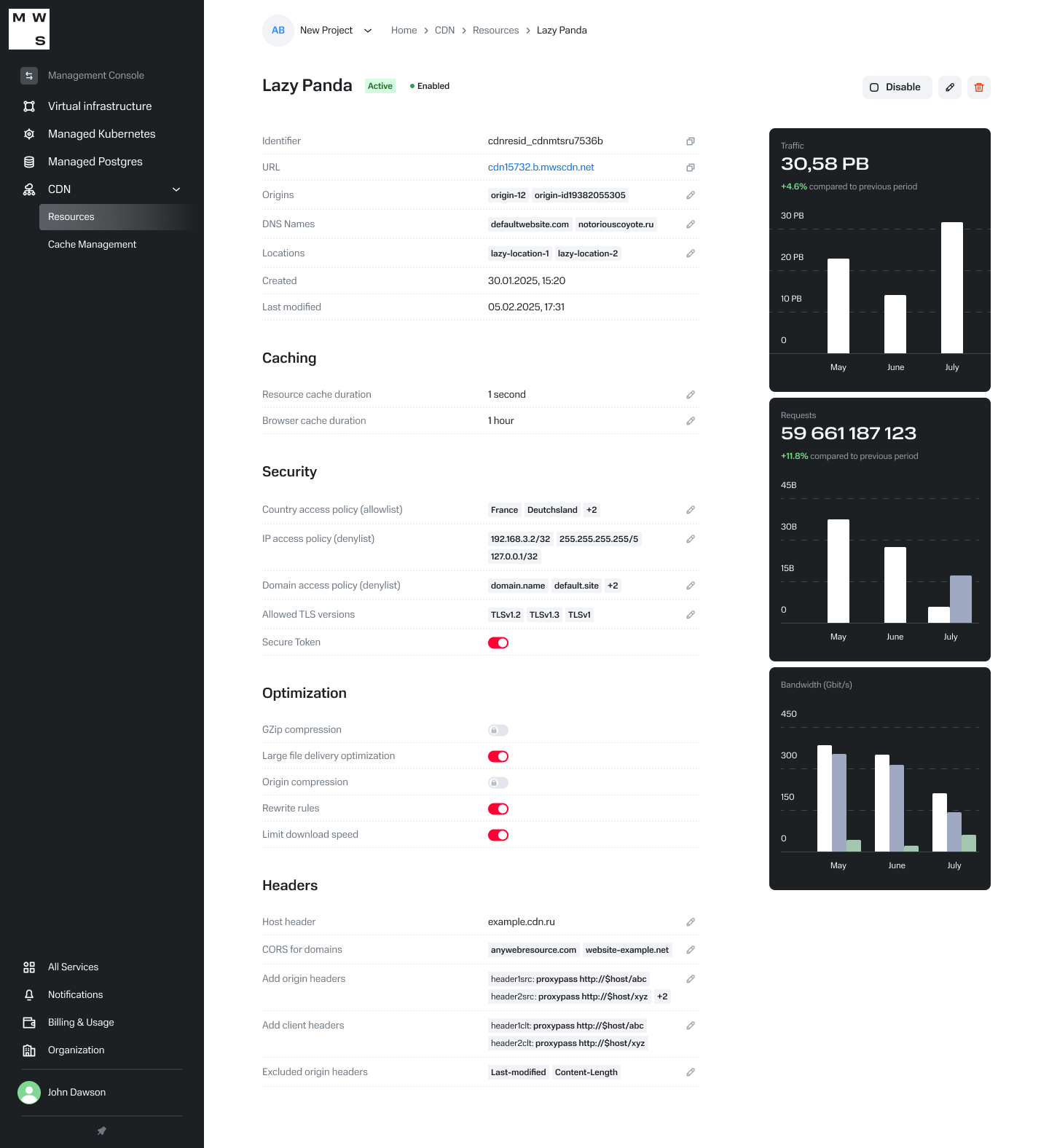
A CDN resource combines multiple delivery components — origins, caching rules, security settings and optimization parameters — into a single configuration entity
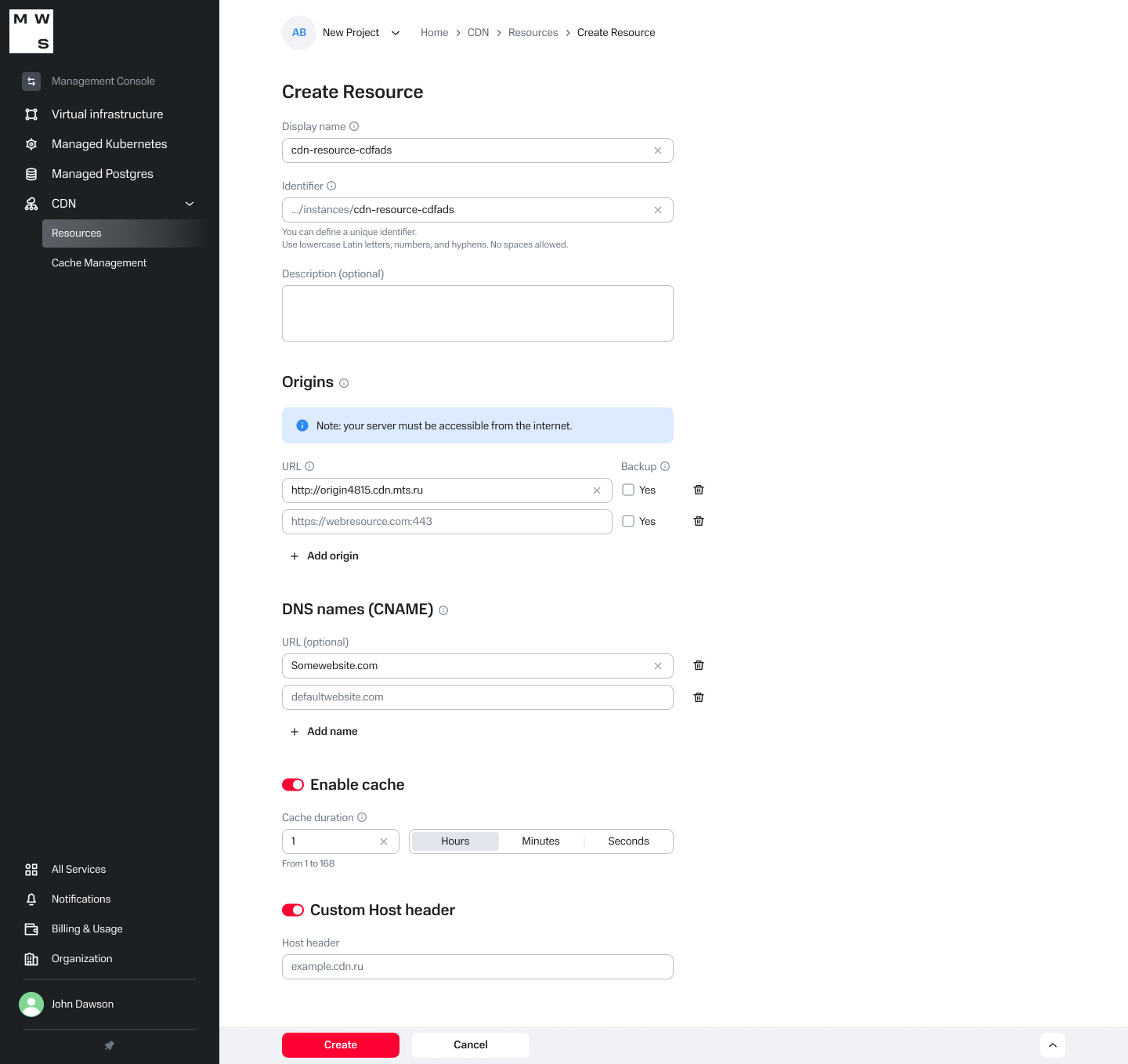
The creation flow guides engineers through the initial setup of a delivery resource, including origin configuration, DNS mapping and caching behaviour
Once a resource is created, engineers can configure and monitor its delivery behavior through a structured overview interface
Centralized resource configuration
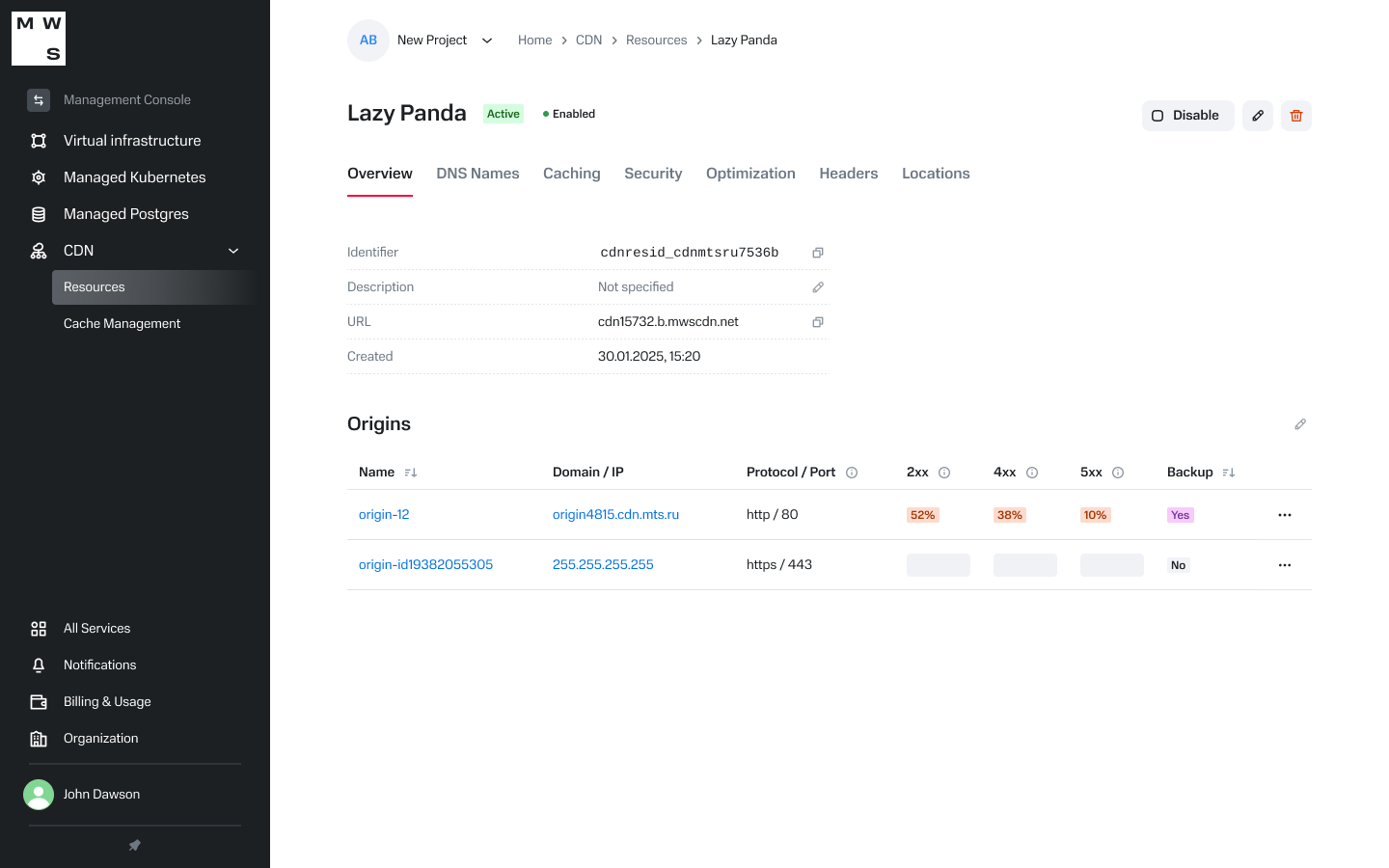
The resource overview acts as a central control panel for delivery configuration, allowing engineers to review origins, domains and delivery status in one place
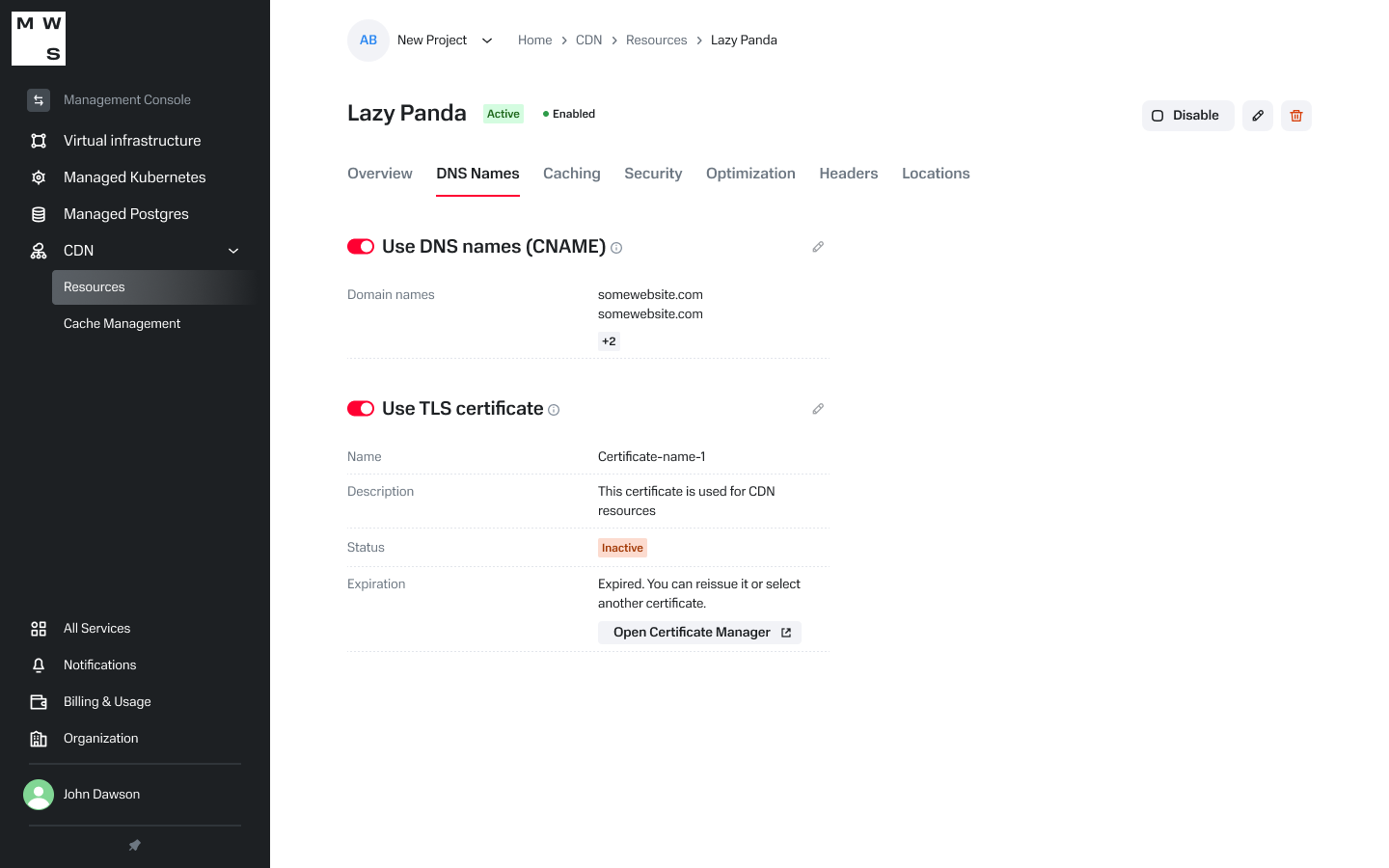
DNS settings allow teams to connect delivery resources with public domains and control routing behaviour
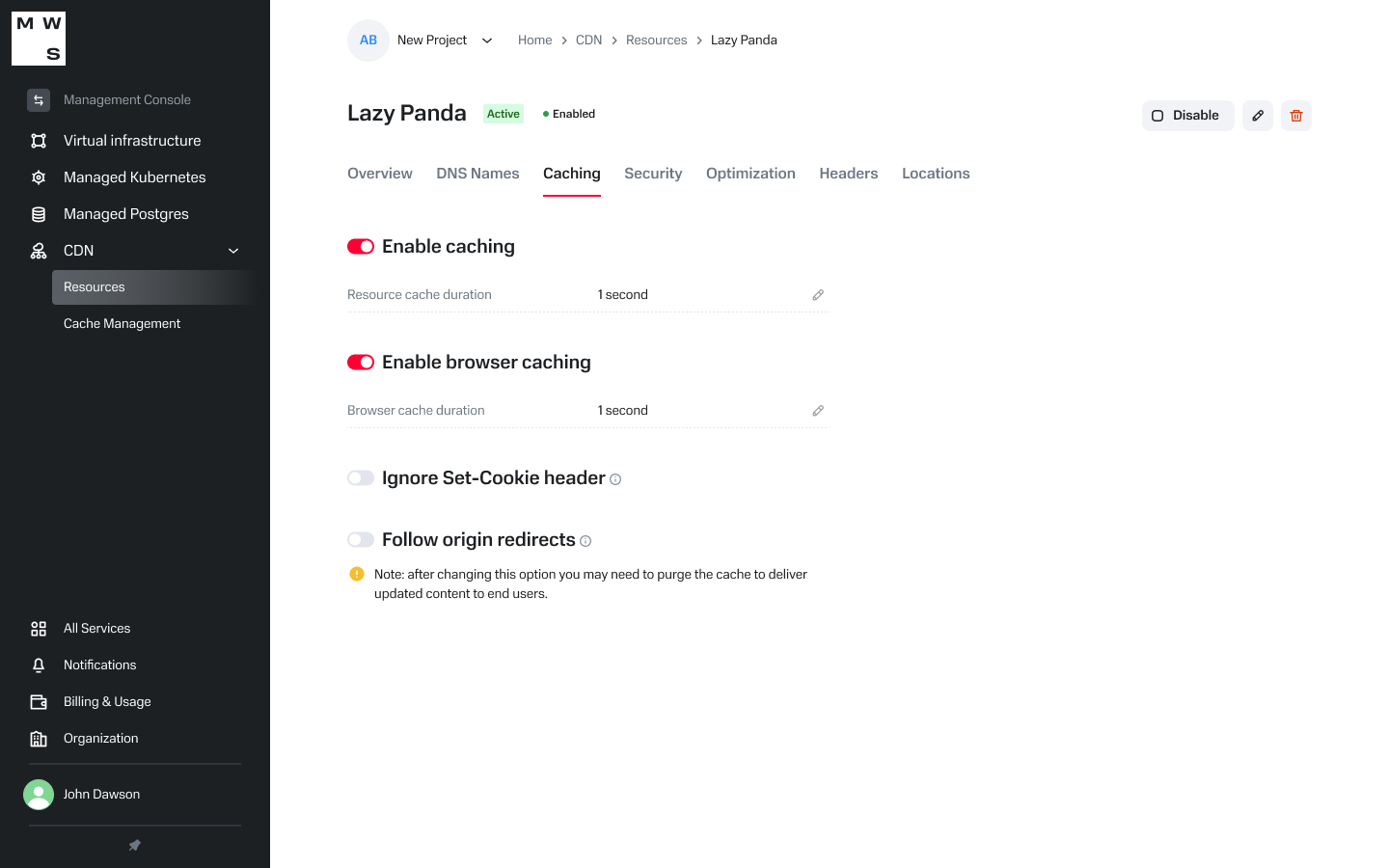
Caching policies define how content is stored and delivered across CDN edge locations to improve performance and reduce origin load
Designing for security and performance
Infrastructure tools must keep critical controls visible while preventing configuration mistakes.
Security policies, performance options and delivery rules were structured as dedicated sections so engineers can review and update policies without navigating across multiple dashboards.
This approach turns a dense technical interface into a predictable control panel with clearer ownership of each configuration layer.
Security, headers and performance optimization
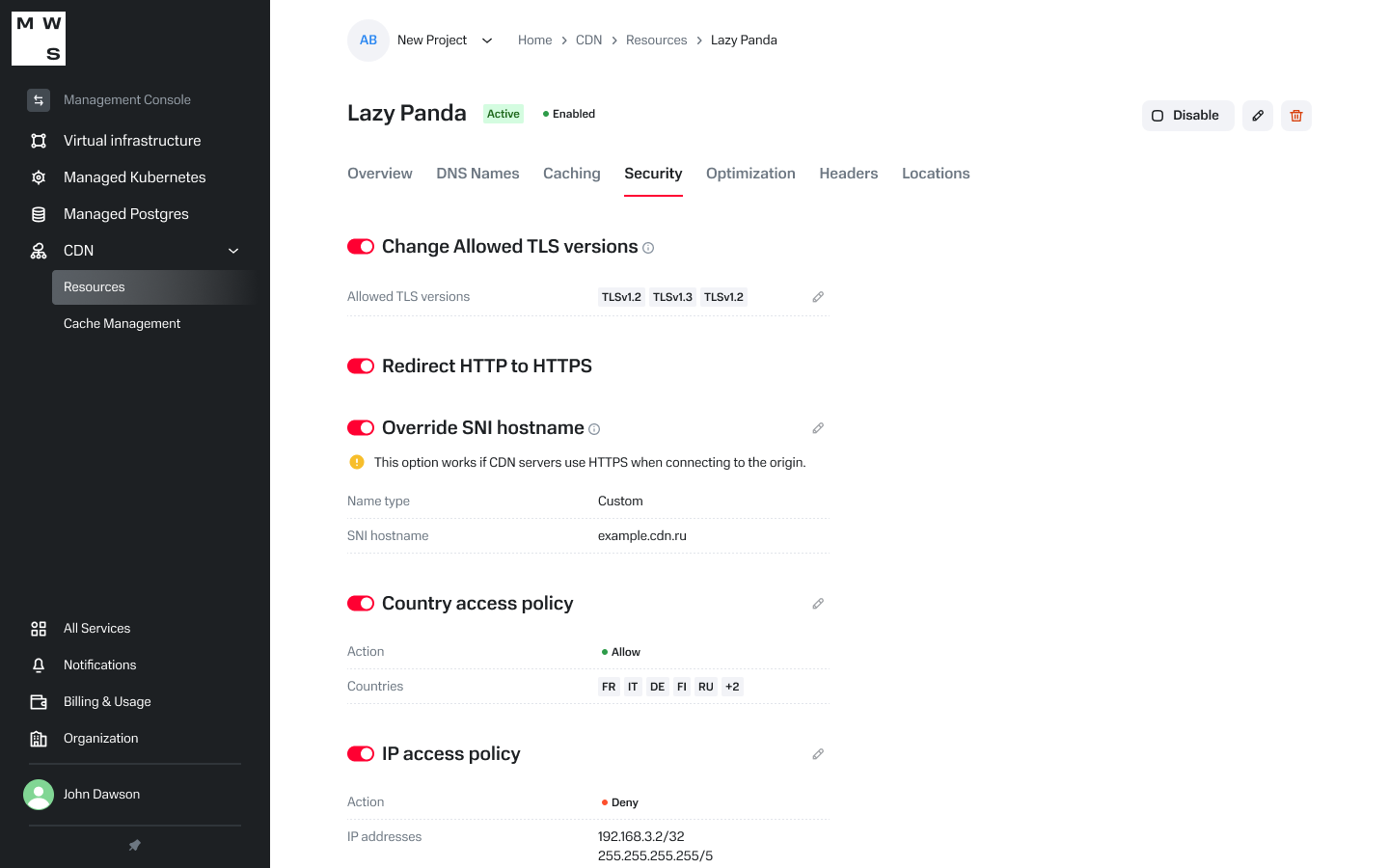
Security settings allow engineers to define TLS policies, headers and restrictions that protect delivery endpoints
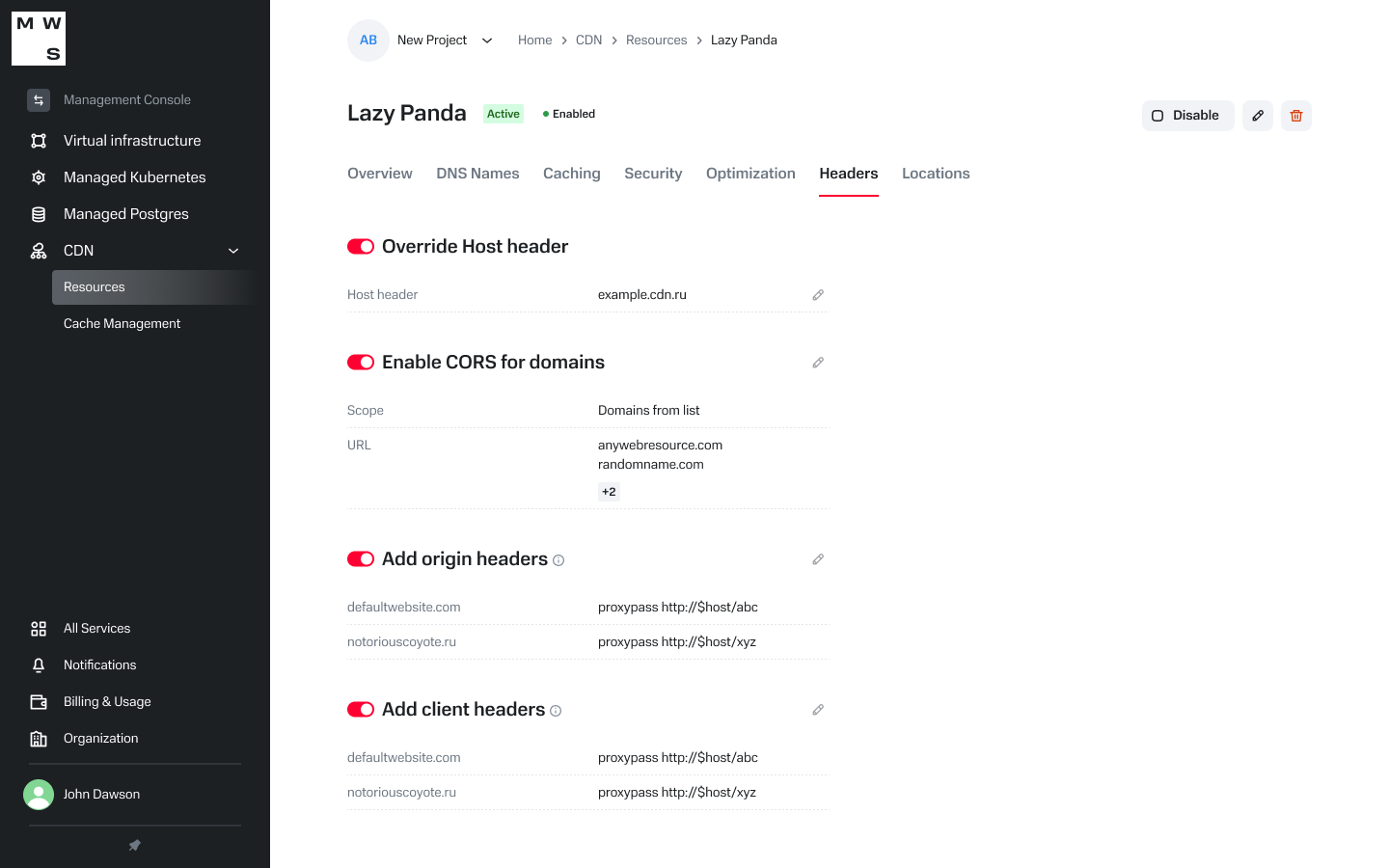
Header configuration enables teams to control how requests and responses are handled between clients, edge nodes and origin servers
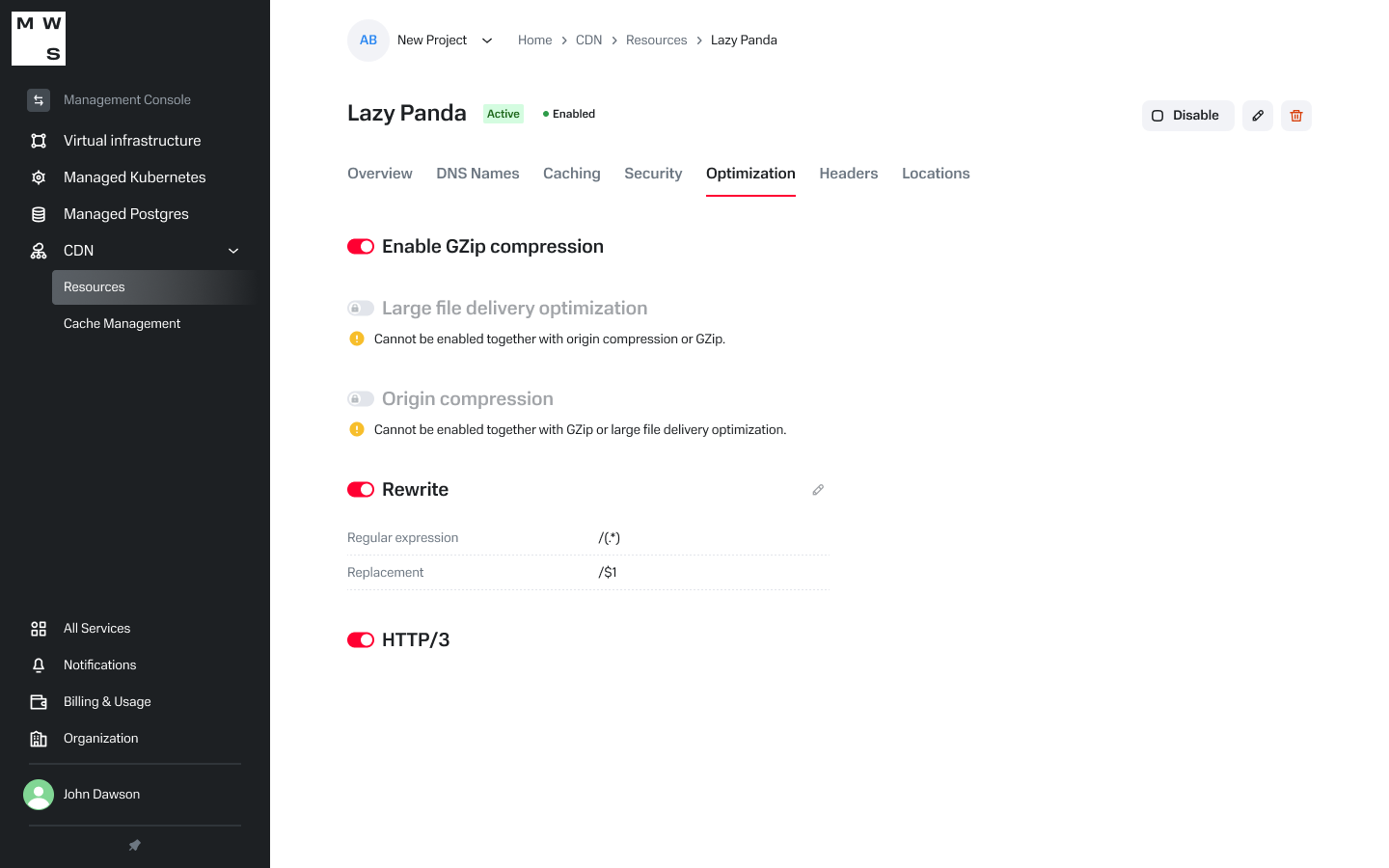
Performance settings allow teams to configure delivery rules that optimize latency and resource usage across the network
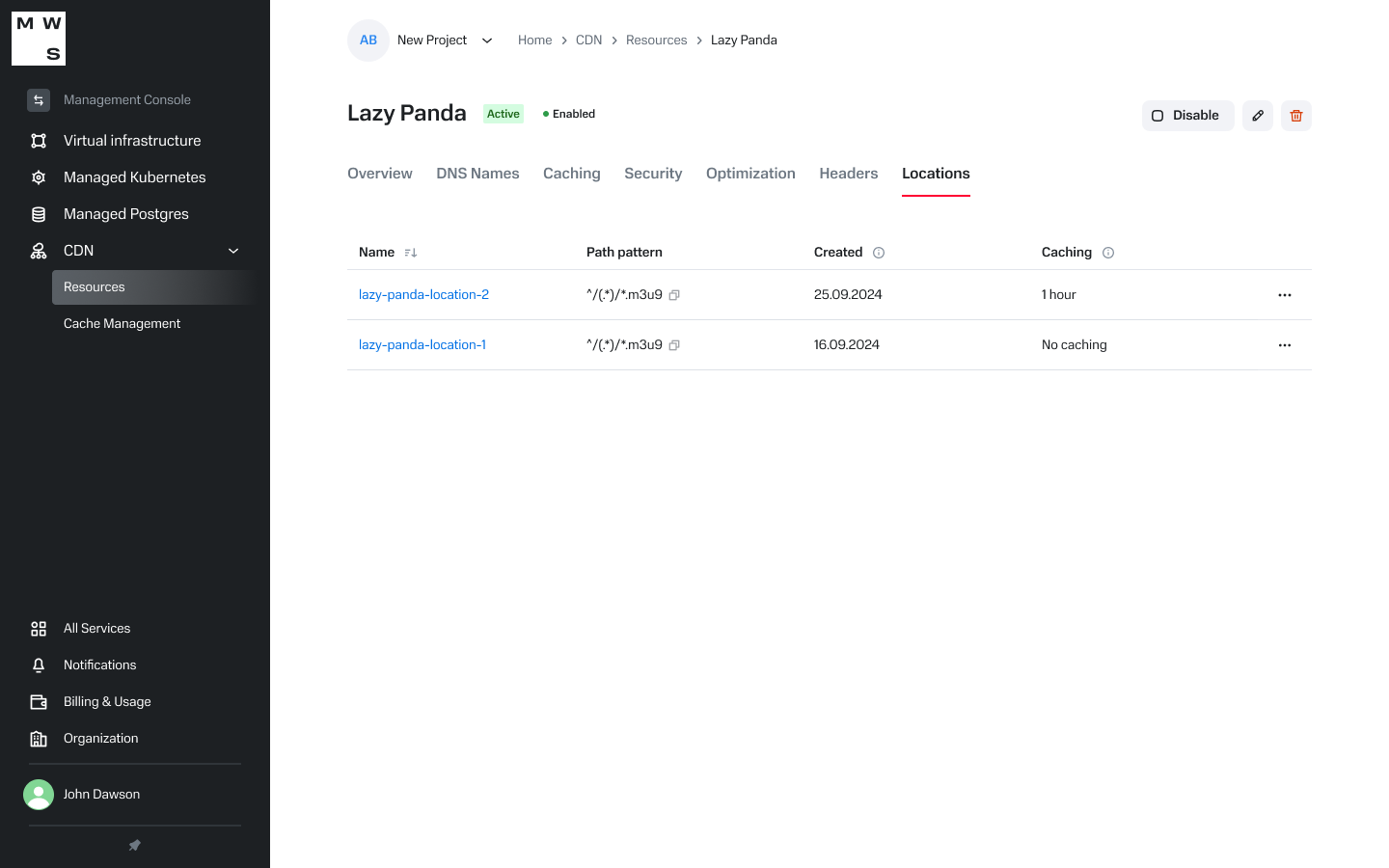
Location settings provide visibility into how traffic is distributed across edge locations and delivery zones
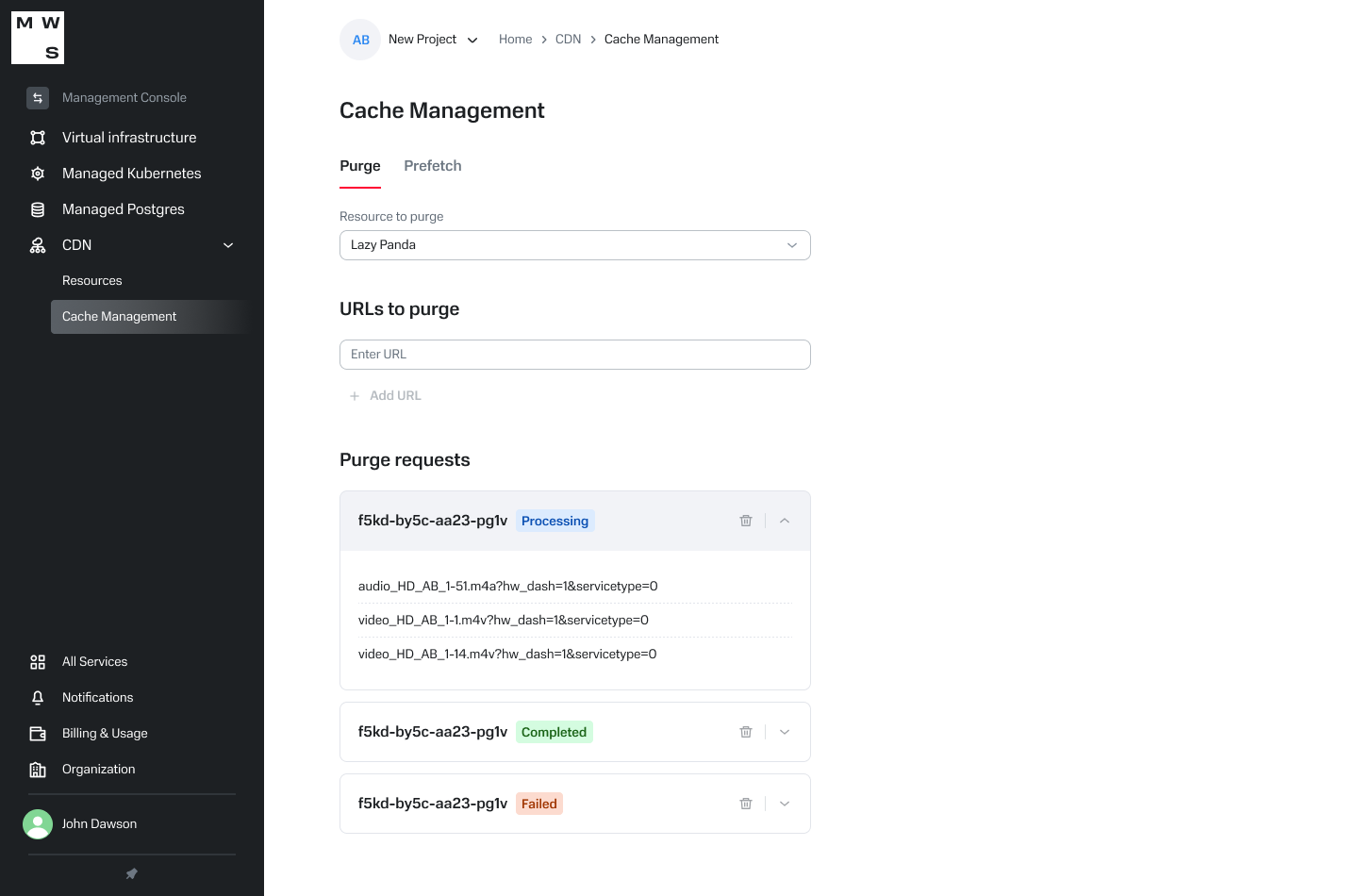
The cache management interface supports operational tasks such as purging outdated content and preloading assets for faster delivery. Real-time status labels make distributed operations easier to track across the CDN network.
Outcome
The resulting interface provides infrastructure teams with a structured environment for managing CDN delivery resources and configuration layers.
By organizing complex settings into predictable sections and workflows, the platform helps engineers configure delivery behaviour faster while maintaining visibility over security, caching and optimization policies.
The final product became the foundation for managing CDN resources within the MTS infrastructure platform.